Tech diving: what it is, training path, costs
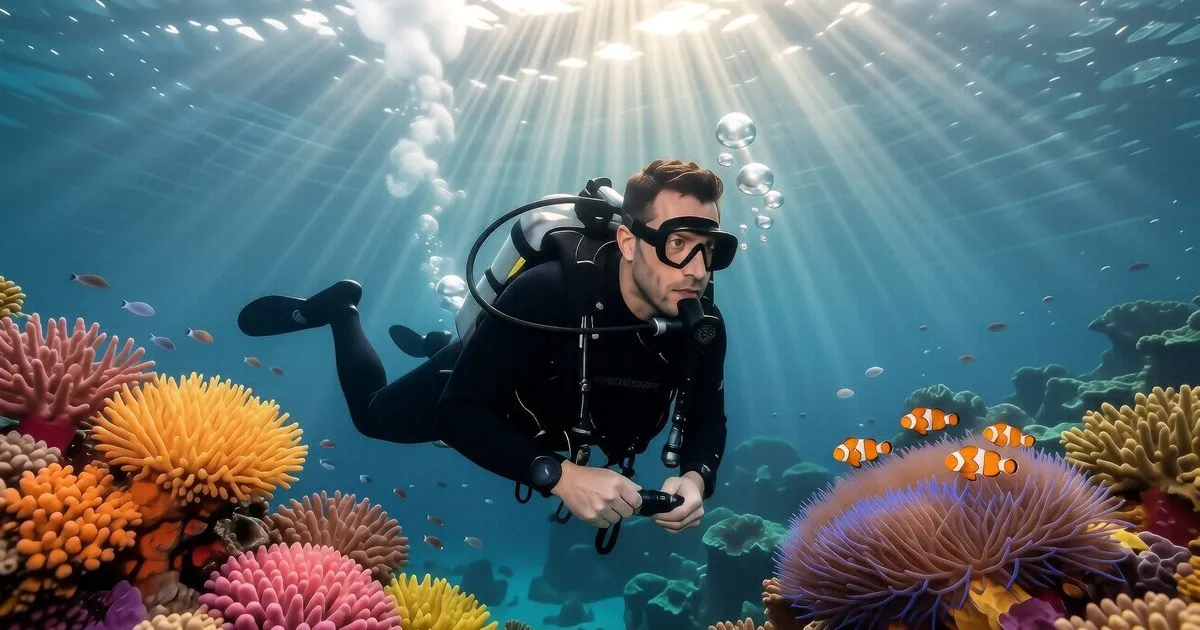
The limits of recreational diving
Recreational diving has strict boundaries. You generally stay above 40 m. If you hit your No Decompression Limit (NDL), you must ascend immediately. This rule keeps things simple. Most divers follow these rules without issue. However, some wrecks or reefs sit deeper.
I remember diving a wreck in Cebu back in 2014. The structure was beautiful. I wanted to see the engine room at 55 m. My recreational training didn’t allow that depth. I had to turn around early. This frustration is why people seek tech training.
Technical diving breaks these standard rules. It allows for deeper depths and longer bottom times. You use specialized gases to manage nitrogen and oxygen. It is not a hobby for everyone. The risks are much higher here.
Understanding decompression and gas mixes
Decompression is the core of tech diving. In recreational dives, you ascend directly. Tech divers must perform mandatory decompression stops. These stops allow nitrogen to leave your body safely. If you skip them, you face serious injury.
Gas management changes everything. You will use Trimix for deep dives. Trimix is a blend of helium, nitrogen, and oxygen. Helium reduces nitrogen narcosis at depth. It makes the dive much more manageable. Without it, you might lose focus.
Oxygen toxicity is another major risk. High partial pressures of oxygen can cause seizures. Tech divers monitor their PPO2 constantly. They use multiple redundant computers to track this. Safety depends on math and discipline.
Nitrox is common in recreational diving. Tech diving takes this further with deco gases. You might switch to 50% Nitrox or 100% oxygen. These gases speed up your decompression. They help you get home safely after deep work.
The training path and agencies
Training follows a very specific ladder. You cannot skip steps in this process. Most people start with Advanced Nitrox and Decompression Procedures. This is the foundation for everything else. You learn to manage multiple tanks.
Different agencies offer different philosophies. TDI (Technical Diving International) is quite popular globally. GUE (Global Underwater Explorers) uses a very strict training standard. They focus on high levels of uniformity. This helps divers work together in teams.
IANTD is another major name in the industry. Each agency has its own gear requirements. Some require specific sidemount or twinset configurations. You should research these standards before spending money. Consistency is better than variety here.
Technical diving requires a massive time commitment. You don’t just learn in one weekend. It takes many dives to build muscle memory. Most students need at least 50 logged dives first. Don’t rush this stage.
Equipment and configuration costs
Gear is expensive. You cannot use a standard single-tank setup. Most tech divers use twinsets or sidemount. Twinsets involve two large cylinders connected by a manifold. Sidemount places tanks under the arms. Both provide the necessary gas volume.
Redundancy is the golden rule here. You need two regulators, two computers, and two lights. If one fails, you must have a backup. This redundancy adds significant weight to your kit. It also adds weight to your wallet.
Costs add up quickly. A decent tech regulator setup costs $1,200 USD. A high-end dive computer might be $800 USD. When you add tanks and manifolds, the price climbs. Expect to spend $3,000 to $8,000 for a full OC path.
Don’t buy everything at once. Buy what your course requires first. You can add specialized tools later. Many divers find sidemount more comfortable for wreck work. It is often cheaper to start with sidemount.
Specialized disciplines: Cave and Wreck
Tech diving often branches into specialties. Cave diving is perhaps the most demanding. You enter overhead environments where you cannot swim up. You must follow guidelines to find the exit. This requires extreme mental discipline.
Wreck penetration is also a tech specialty. You move inside sunken ships at depth. Silting can happen very fast in these spaces. One wrong kick can blind you completely. You must master buoyancy to avoid this.
I saw a diver struggle in Anilao once. He wasn’t a cave diver. He tried to enter a small wreck structure. The silt cloud was thick and dark. He had to rely on his backup light. It was a scary moment for everyone.
These disciplines require specific training modules. You don’t just ‘try’ cave diving. You take a course through an agency like GUE or TDI. These courses teach gas laws and navigation. They also teach emergency drill procedures.
Who should avoid technical diving
This is not for everyone. Many divers are perfectly happy at 20 m. If you dislike math, stay recreational. Tech diving involves constant calculations. You must track gas, depth, and time.
Physical fitness matters a lot here. Carrying 40 kg of gear is hard. You will be working harder under pressure. If you have heart issues, talk to a doctor. DAN (Divers Alert Network) provides great medical resources for this.
Don’t dive tech if you are a thrill-seeker. This is about managing risk, not seeking it. The goal is to stay calm during emergencies. Adrenaline is your enemy in a decompression stop. You need a steady hand and mind.
If you struggle with buoyancy, wait. Master your trim in shallow water first. Tech diving punishes poor skills very harshly. It is better to be a great recreational diver. Don’t become a mediocre tech diver.
Summary of the transition
The jump is massive. You move from simple dives to complex missions. The gear, the gas, and the math change. It is a rewarding path for many. But it requires respect for the ocean.
Start by upgrading your skills. Take a Nitrox course if you haven’t already. Learn to manage your buoyancy perfectly. Once you are stable, look at decompression training. Don’t skip the basics of gas management.
If you want to try deep diving, find a reputable school. Look for instructors with years of experience. Ask about their specific gas blending protocols. This ensures you are learning the right way.
Check your gear maintenance logs regularly. A faulty valve can be fatal at 60 m. Safety is a continuous process, not a one-time check. Stay disciplined and stay safe.
If you want to start, take a sidemount workshop before attempting any deep wreck dives.
Frequently asked questions
How much does tech training cost?
A full open circuit technical path typically costs between $3,000 and $8,000 USD. This includes course fees, specialized gas mixes like Trimix, and heavy gear requirements.
What is the main difference from recreational diving?
Technical diving involves exceeding the 40m depth limit or entering overhead environments where direct ascent to the surface is impossible due to physical obstacles.