Night diving: gear, signals, behavior shifts
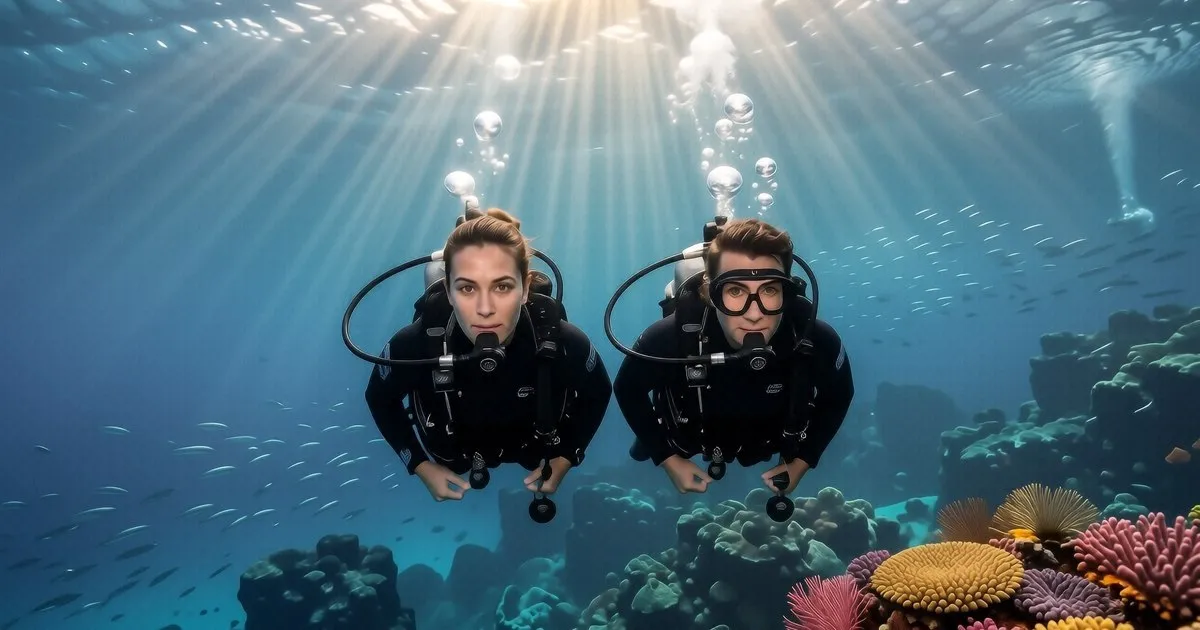
Essential night dive equipment
Light is your lifeblood. You need a primary torch with at least 1000 lumens for effective reef inspection. I lost my first cheap light in Koh Tao back in 2012 because the seal failed after one hour.
Always carry a backup. A secondary light provides safety if your main unit dies while you are at 20 m depth. Most divers prefer a compact 300 lumen light for this role.
Check your seals. Use silicone grease on O-rings to prevent leaks during your next trip to Anilao.
Red lights are also useful. They help preserve your natural night vision while you move between sites.
Modified night diving signals
Hand signals fail in the dark. You cannot see a ‘thumbs up’ if no light hits the diver’s hand. Instead, use your torch to create specific patterns.
Circle the light to indicate ‘OK’. This is the standard method for most PADI or SSI divers. It works because the moving beam is easy to spot against the black water.
Avoid pointing lights directly into eyes. This creates temporary blindness and ruins your teammate’s vision.
Slow movements are better. Fast, jerky light movements can look like a predator or cause disorientation.
Buoyancy and depth perception
Depth perception disappears at night. The lack of ambient light makes it hard to judge how far away the bottom is. I once drifted too close to a reef in Komodo because I misjudged my distance from a ledge.
Control your breathing. Small, controlled breaths help maintain a steady position in the water column. You must stay neutral to avoid hitting delicate corals.
Watch your gauges. Check your pressure and depth frequently since you cannot rely on visual landmarks.
Use your computer. A well-lit dive computer is vital for tracking your ascent rate and remaining bottom time.
What to see night dive
The reef changes completely after sunset. Many species that hide during the day emerge to hunt. You will see different behaviors than you do during a 10:00 AM dive.
Octopuses are common. They often crawl out of crevices to hunt for crabs or small fish. I saw a massive blue-ringed octopus near Cebu in 2018 while searching for macro life.
Lionfish are active hunters. They use their fins to corner prey in the dark. You might also see eels emerging from their holes.
Bioluminescence is a bonus. Some plankton glow when you move your hands through the water. This effect is common in Tubbataha if the conditions are right.
Photography challenges at night
Low light makes photography hard. You need a powerful strobe to freeze movement and show true colors. Without a strobe, everything looks blue or grey.
Steady your body. Use a tripod or hold onto a rock if you need to take long exposures. Do not touch the reef for stability.
Manage your white balance. The light from your torch will change how colors appear on your sensor.
Check your settings. ISO levels must be higher than daytime shots, but too much noise ruins the image.
Safety and site preparation
Reconnaissance is vital. Visit the site during the day so you know the topography and exit points. This helps you find your way back to the boat or shore.
Check the tides. Strong currents can change significantly when the sun goes down. Always consult with local dive masters about local conditions.
Follow DAN guidelines. If you feel unwell or disoriented, signal your buddy and begin a controlled ascent immediately. Safety is more important than seeing one more fish.
Prepare your gear early. Check every light and battery before you leave the dive center.
Comparison of global night dive sites
Different regions offer different experiences. Some places focus on macro life while others focus on large predators. You should choose based on your skill level.
Koh Tao is great for beginners. The shallow reefs and calm water make it easy to practice light signals. Most courses here cost around $50 USD for a single night dive.
Komodo offers high adrenaline. The currents are strong, so you need advanced buoyancy skills. You might see reef sharks hunting near the drop-offs.
Anilao is the macro capital. It is perfect if you want to photograph nudibranchs or pygmy seahorses. The visibility can be low, often under 10 m in certain areas.
Check your local weather. Rain can reduce visibility and make shore entries difficult.
Managing your dive profile
Night dives often happen late. This means you must manage your nitrogen loading carefully. Do not plan a deep night dive if you have already done two daytime dives.
Watch your time. It is easy to lose track of time when focused on a small subject. Use your light to check your watch or computer screen regularly.
Ascent rates matter. Stay slow and steady as you head toward the surface.
Plan your surface interval. You will likely be tired after a night dive.
If you are new to this, practice your light signals in a swimming pool before trying them in the ocean.
Frequently asked questions
Do I need a backup light?
Yes. Always carry a secondary torch because a primary light failure at 18 m depth can cause panic.
How do I signal my buddy at night?
Use light circles instead of hand signals. Hand signals are difficult to see in the dark without a beam.