Divemaster program: cost, time, what you actually learn
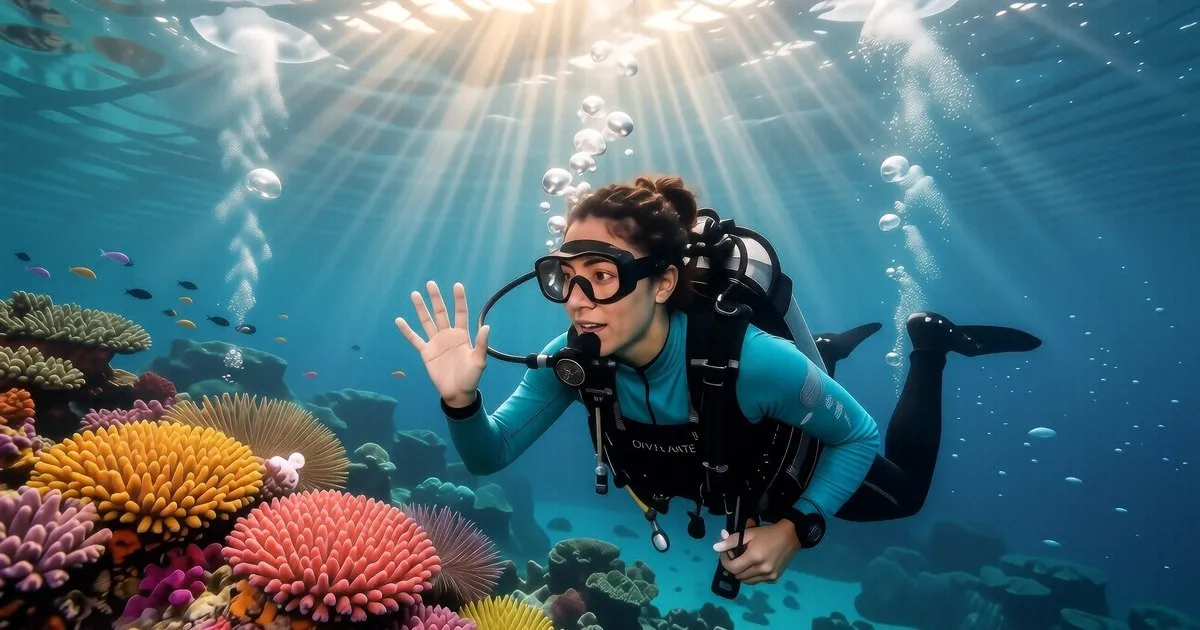
The real cost of professional training
Training is expensive. You should budget between $1500 and $3500 for the course fees alone. This price does not include your food or your bed. I saw a student in Koh Tao in 2022 pay an extra $800 for a basic hostel room during his two-month stay.
Logistics matter. You must also account for gear replacements and rental fees if you do not own everything. Most students spend another $500 on small items like new fins or a dedicated dive computer. High-end gear costs more money.
Course duration and intensity
A typical program lasts 4 to 8 weeks. This is not a holiday. You will spend most of your time in the water or studying theory. I remember my own training feeling like a full-time job because we started at 7:00 AM every single day.
Time flies quickly. You might think you can finish in two weeks, but the dive counts usually prevent that. If the weather is bad for five days, your timeline shifts immediately. Consistency is key.
What you actually learn on site
You do not just swim with fish. The curriculum focuses on leadership and logistics. You will practice managing groups of students while they deal with buoyancy issues or equipment failures. This requires constant focus.
Theory is heavy. You must pass exams regarding dive physics and physiology so that you can assist in emergencies. Many students struggle with the math during the first week. Practice makes perfect.
Mapping projects are standard. You might spend hours underwater documenting a specific reef section to help local conservation efforts. This work provides practical experience. It is also quite tiring.
PADI vs SSI divemaster differences
Agencies differ in structure. PADI uses a very rigid system of standards that most global resorts recognize instantly. This recognition helps when you apply for jobs in remote areas. It is a standard choice.
SSI offers more flexibility. Some shops prefer SSI because the training modules can be completed at your own pace via digital materials. This might save you time if you are a fast learner. Both agencies work well.
Check local shop requirements. Before you pay, ask if the resort you want to work for accepts your specific agency certification. Some boutique liveaboards in Komodo prefer one over the other. Do your research first.
The 2026 employment landscape
The job market has changed. In Southeast Asia, the market is very saturated because so many people finish their courses every month. Finding a high-paying role in Thailand is harder than it was ten years ago. Competition is fierce.
Look toward the Caribbean for better pay. While travel costs are higher, the demand for professional staff remains more stable in regions like Bonaire or Cozumel. You need a plan before you start. Do not just dive in.
Internships are common. Many people do a dm internship to gain experience, but few transition into paid roles immediately. You often have to work for free for the first month. This is a hard truth.
Divemaster versus Instructor decision tree
Do not rush into your Instructor course. A Divemaster is a support role. You manage people and gear. An Instructor teaches skills and signs off on certifications. These are different jobs.
Assess your energy levels. If you enjoy the social aspect of guiding, stay a Divemaster. If you love the technicality of teaching, aim for the next level. Both paths are valid.
Check your finances first. Becoming an Instructor costs an additional $2500 to $4000 on top of your DM fees. Most divers wait until they have saved enough money. Plan your budget carefully.
Safety and professional standards
Safety is the priority. You must follow the guidelines set by the RSTC (Recreational Scuba Training Council) to ensure student safety. Professionalism is not optional. It is a requirement.
Always carry a DAN (Divers Alert Network) membership. This provides essential medical insurance if an accident happens during your training or work. It is a small cost for peace of mind. Do not skip this.
Watch your buddy. A professional divemaster must always lead by example in terms of buoyancy and air management. If you cannot control yourself, you cannot lead others. Practice your skills daily.
Essential gear for professionals
You need reliable equipment. A dedicated dive computer is mandatory because you cannot rely on a student’s device for your own safety. It must be accurate. Buy something mid-range.
Carry a surface marker buoy (SMB). You will use this frequently when guiding groups in open water or during drift dives. Make sure it is large enough to see. Visibility saves lives.
Keep a small tool kit. A simple screwdriver or pliers can fix a leaking mask strap or a loose fin strap on the boat. Small fixes prevent big delays. Be prepared for anything.
Preparing for your first professional dive
Start training early. Do not wait until you are in the tropics to start practicing your buoyancy. Work on it in your local pool. This saves time later.
Log everything meticulously. Use an app or a physical logbook to track every single dive, depth, and location. Accurate records are vital for your professional profile. Keep them clean.
If you want to test your skills, try a drift dive in Anilao before committing to a full course. It will show you if you can handle the physical demands of the job. Start small.
Frequently asked questions
How many dives do I need for Divemaster?
Most agencies like PADI require 40 logged dives before you start the official training. However, you will likely complete 60+ dives during a standard 6-week internship to meet competency standards.
Is it worth doing a DM internship in Southeast Asia?
The market is saturated in places like Koh Tao. While training is cheap, finding a paid job there in 2026 is difficult because of high local competition.