Underwater photo: GoPro to mirrorless path
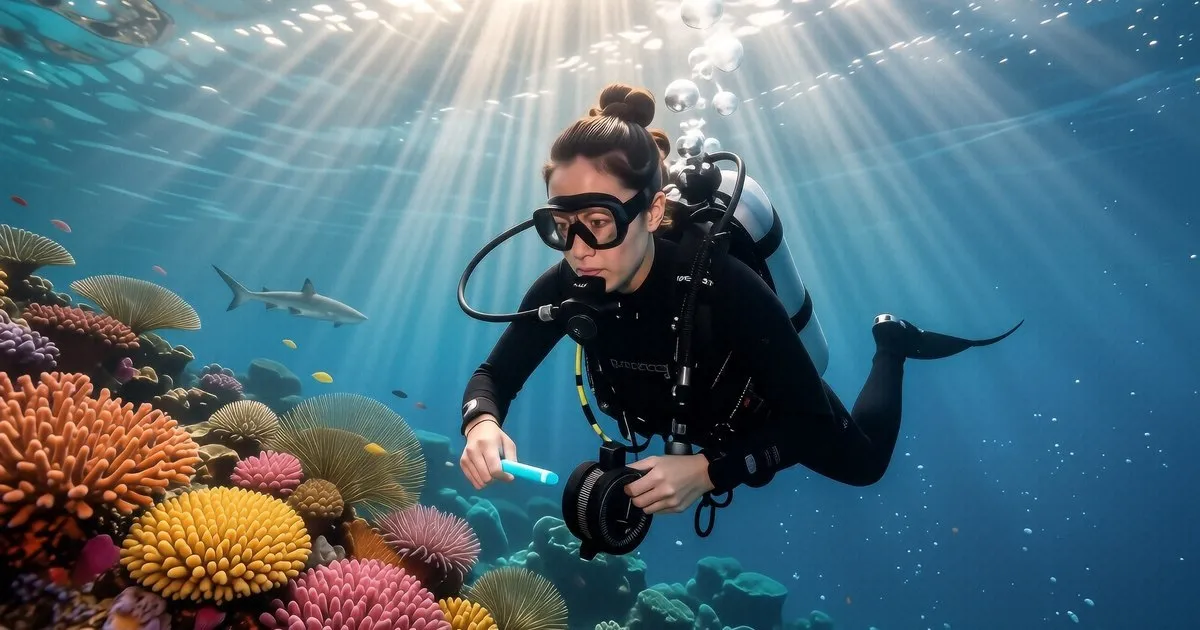
The GoPro baseline
Most divers start with action cameras. I used a GoPro Hero 11 during my first trip to Anilao in 2021. It is a solid choice. You get decent wide-angle shots because the sensor handles movement well. However, you lose color quickly.
Depth kills your reds. At 10 m, everything looks blue or green. A GoPro Hero 12 with a dedicated dive housing costs around $450 USD. This setup is great for beginners. It captures large subjects like sharks or wrecks effectively.
Don’t expect macro results here. The lens is fixed. You cannot get close enough to tiny critters without significant distortion. Use it for wide-angle diving instead.
The enthusiast middle ground
The Olympus TG series changed my approach. I bought a TG-6 in 2019 for reef shots. It is much better than an action cam. This camera excels at macro photography because of its dedicated microscope mode. You can get within 1 cm of a subject.
It is compact. You can fit it in a small bag. The TG-7 is the current standard for enthusiasts. It costs roughly $550 USD without extra accessories. This price is reasonable for the capability provided.
Manual settings are vital. Auto white balance fails underwater. I spent hours in 2020 learning how to set custom white balance at 15 m depths. Without this, your photos look muddy. You must control the light manually.
Moving to mirrorless systems
Serious photographers use mirrorless cameras. This is a big jump. You need a camera like a Sony A7 series or a Canon EOS R. These bodies cost $2,000 USD or more. You also need a specialized underwater housing.
A housing from Nauticam or Sea&Sea adds another $1,500 USD to your bill. It is expensive. However, the image quality is vastly superior because of the larger sensor. You get better dynamic range and less noise.
Learning this gear takes time. I felt overwhelmed during my first professional shoot in Komodo in 2022. The weight of the housing is significant. You must plan your buoyancy carefully to avoid sinking.
System complexity increases. You have strobes, arms, and sync cords. Each piece adds drag in the water. If you dive in currents, this becomes a real problem. Practice in a pool first.
Light: Filters versus strobes
Light is your biggest challenge. Water absorbs red light first. This happens within the first 5 m of depth. You have two main ways to fix this. You can use filters or artificial light.
Red and magenta filters are cheap. They sit in front of your lens. They work well for video because they add color back into the scene. However, they also reduce the total amount of light available.
Strobes are different. They are external flashes. They provide their side-lighting to restore color. I prefer strobes for all my still photography. They allow you to shoot at higher ISOs without losing detail.
Setup matters. If your strobes are too close, you get backscatter. This is when light hits particles in the water. It looks like white snow in your photos. Position your lights wide and slightly behind the lens plane.
The macro versus wide-angle split
Decide on your subject early. Do you love tiny shrimp or big mantas? This choice dictates your entire gear list. Macro photography requires specific lenses. You need a 60 mm or 100 mm macro lens.
Wide-angle photography is the opposite. You need fisheye lenses to capture large scenes. I prefer wide-angle shots of wrecks. They require more effort to balance in the water. You must stay steady.
Macro gear is heavy. It requires precise movement. If you move 2 cm, you lose focus. This makes it a very technical discipline. Many divers find it frustrating at first.
Wide-angle gear is bulky. The large lenses and domes are awkward. You will struggle in tight spaces like caves or wrecks. Choose the style that fits your diving personality.
Buoyancy: The hidden skill
Your camera is not your most important tool. Your lungs are. I saw many talented photographers ruin shots because they couldn’t stay still. They kicked up sand and ruined visibility. This happens often in Cebu.
Bad buoyancy kills photos. If you hover too high, you lose the subject. If you sink, you hit the coral. You must master neutral buoyancy before buying a $3,000 USD setup. It is the foundation.
Practice your trim. Your body should be horizontal. This allows you to use both hands for the camera. I spent three months practicing just hovering in a pool. It made a massive difference in my 2023 results.
Use your fins wisely. Avoid the frog kick if you are near the bottom. The flutter kick sends silt everywhere. Silt stays in the water for minutes. This makes photography impossible for a while.
Post-processing and digital rescue
Sometimes the shot is not perfect. You can fix many errors in software. I use Adobe Lightroom for almost everything. It allows you to adjust white balance after the dive.
Presets help beginners. You can download profiles specifically for underwater use. These presets boost the reds and blues instantly. They are a great starting point for new photographers.
Don’t overdo it. Many beginners make photos look fake. They push the saturation to 100%. This destroys the natural look of the reef. Aim for subtle corrections instead.
RAW files are essential. Always shoot in RAW mode. JPEGs throw away too much data. If you shoot RAW, you can recover details from shadows. This is vital when using strobes.
Planning your first shoot
Start small and local. Do not fly to the Maldives for your first attempt. Go to a familiar dive site where you know the currents. This reduces your stress level significantly.
Check your gear twice. O-rings must be clean. A single hair can cause a leak. I once lost a lens in 2018 because of a bad seal. It was an expensive mistake.
Watch the weather. High surge makes photography difficult. Even a small swell can toss you around. Wait for a calm day to practice your macro shots.
Focus on one thing. Do not try to master strobes and macro at once. Pick one skill and repeat it. If you want to shoot nudibranchs, start by practicing buoyancy near small rocks. If you want mantas, work on wide-angle framing in open water.
Frequently asked questions
Is a GoPro enough for serious macro photography?
No. While a GoPro Hero 12 works well for wide shots, it lacks the magnification needed for small subjects like nudibranchs at 15m depth.
Should I use red filters or strobes?
Red filters are cheap ($20-$50) and work for video, but strobes provide better color accuracy for stills by replacing lost light.