Castle Rock (Komodo) — Indonesia
Indonesia · komodo · max 40m · from advanced · strong current
- Depth
- 5–40 m
- Visibility
- 15-30m
- Best months
- Mar, Apr, May, Jun, Jul, Aug, Sep, Oct
- Marine life
- reef-shark, barracuda, ray
- Features
- pinnacle
The Profile
Castle Rock is a massive submerged pinnacle. It sits north of Komodo island at coordinates -8.4333, 119.5667. The structure rises from deep water up to 5 m. Most divers stay between 15 m and 30 m. I first dived this site in 2012 with a local boat operator out of Labuan Bajo.
The topography is steep. You will find hard corals on the upper edges. The depth reaches 40 m at the base. It is a high-energy environment.
What you’ll see
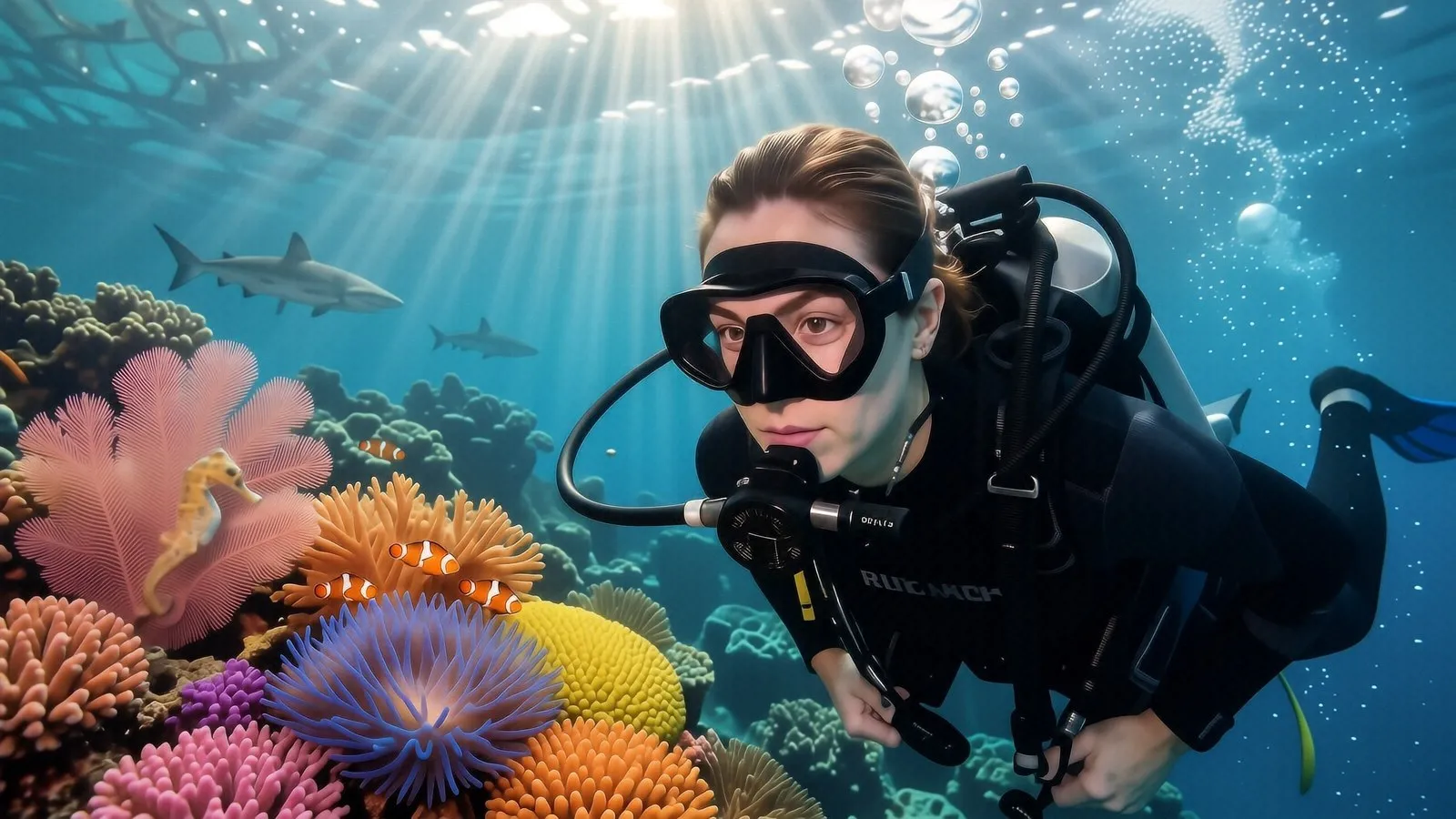
Expect large predators here. You will see reef-shark species frequently. Grey reef sharks patrol the edges while whitetips rest in the cracks. I saw three hammerheads near the wall during a dive in July 2018.
Schooling fish are constant. Barracuda often form silver clouds above the reef. You might spot a ray resting on the sand patches. The visibility usually stays between 15 m and 30 m. It is a busy place.
Conditions and skill
This site requires advanced certification. You need at least 30 logged dives before attempting it. The current is often very strong. You must carry a reef hook in your kit. This tool allows you to stay stationary without touching the coral.
Safety is a priority. Always carry a large SMB (Surface Marker Buoy). The drift can pull you far from the boat quickly. Do not attempt this if you struggle with buoyancy. You need total control.
Logistics from Komodo
Most divers access Castle Rock via liveaboards. These boats depart from Labuan Bajo. Day trips are possible but they are exhausting. A typical day trip takes 3 to 4 hours of boat travel one way. This distance makes long days common.
Liveaboard prices vary widely. A 4-day trip usually costs between $450 and $700 USD. Check the boat’s engine reliability before paying. Some older vessels struggle with the heavy Komodo swells. Smaller boats move faster through the channels.
When to go
The best months are March through October. The water is clearest during these months. I prefer diving in May because the currents feel more predictable then. The temperature stays around 27°C to 29°C.
Rain can affect visibility. Heavy storms in January reduce sightlines significantly. You should plan your trip for the dry season. Most boats follow a strict seasonal schedule. Check the local weather reports before booking.
Honest negatives
The crowds can be intense. If you arrive at 10:00 AM, you might find five other boats. This makes the shark sightings feel less private. It is hard to find a quiet corner. You must share the space.
The current is punishing. It drains your air faster than a calm site. I have seen divers use 50% of their tank in 20 minutes. This happens because you fight the surge. Bring extra air if you are a heavy breather. The noise from the boat engines also breaks the silence. You will hear them often.
Planning your trip
Check your gear twice. Ensure your reef hook is secure on your BCD. If you have never dived in strong currents, practice at a calmer site like Batu Bolong first. This builds the necessary muscle memory for Castle Rock.
Frequently asked questions
Do I need special gear for Castle Rock?
Yes, a reef hook is mandatory because the currents are very strong.
What is the best depth for seeing sharks?
Most shark activity occurs between 15 m and 25 m on the upper slopes.